

13. February 2018
Mucus is a highly hydrated viscoelastic gel present on various moist surfaces in our body including the eyes, nasal cavity, mouth, gastrointestinal, respiratory and reproductive tracts. It serves as a very efficient barrier that prevents harmful particles, viruses and bacteria from entering the human body.
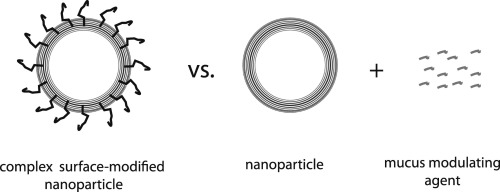
10. January 2018
Nanoparticulate drug delivery systems (nDDS) offer a variety of options when it comes to routes of administration. One possible path is crossing mucosal barriers, such as in the airways and in the GI tract, for systemic distribution or local treatment. The main challenge with this administration route is that the size and surface properties of the nanoparticles, as opposed to small molecular drugs, very often results in mucosal capture, immobilization and removal, which in turn results in a ..
24. June 2016
Abstract The aim of this study was the development of zeta potential changing self-emulsifying drug delivery systems (SEDDS). Various cationic surfactants were incorporated into a formulation consisting of 30% Cremophor EL, 30% Capmul MCM, 30% Captex 355 and 10% propylene glycol (w/w). A substrate of intestinal alkaline phosphatase (IAP), 1,2-dipalmitoyl-sn-glycero-3-phosphatidic acid sodium (PA), was thereafter incorporated into SEDDS. Size, zeta potential and polydispersity index were...
17. February 2016
A number of biobarriers limit efficient oral drug absorption; both polymer-based and lipid-based nanocarriers have demonstrated properties and delivery mechanisms to overcome these biobarriers in preclinical settings. Moreover, in order to address the multifaceted oral drug delivery challenges, polymer-lipid hybrid systems are now being designed to merge the beneficial features of both polymeric and lipid-based nanocarriers. More
17. December 2015
The conversion of colloidal drug carriers/polymeric nanoparticles into dry microparticulate powders (e.g. by spray-drying) is a prominent approach to overcome the aerodynamic limitations of these formulations for delivery via inhalation. However, to what extent such nano-embedded microparticles disintegrate into individual/intact nanoparticles after contacting relevant physiological media has so far not been addressed. More
22. November 2015
Mucus layer is a hydrophilic absorption barrier found in various regions of the body. The use of particulate delivery systems showed potential in drug delivery to mucosal membranes by either prolonging drug residence time at the absorption or target membrane or promoting permeation of particles across mucus gel layer to directly reach underlying epithelium. More